About Tile Flooring: A Woburn, MA Buyer's Guide
Tile is the floor you choose when water, grit, and heavy traffic are part of daily life. Porcelain shrugs off spills and pet accidents, cleans up with a damp mop, and can outlast almost any other floor in the house. Few materials cover as much design ground: marble veining, weathered wood planks, polished concrete, handmade-look subway, and tiny mosaics for a shower floor. You can explore our tile collection by look, material, and where it installs, from kitchen floors to bathroom walls.
Horizon Interiors supplies and installs tile for homes in Woburn, Burlington, Reading, Melrose, Wilmington, Winchester, Stoneham, and nearby Middlesex County communities. Our own installers handle floors, walls, showers, and backsplashes with the setting materials and waterproofing tile depends on. When you're ready to talk through a project, schedule your free estimate and we'll measure, bring samples, and walk you through the options for your rooms.
What Is Tile Made Of?
Most floor and wall tile is fired clay (either porcelain or ceramic), with natural stone and glass filling specialty roles. Each behaves differently, so the material matters as much as the look:
- Ceramic: clay tile fired and glazed, lighter and easier to cut than porcelain. It's a natural fit for walls, backsplashes, and floors that don't take heavy wear.
- Porcelain: made from finer, denser clay fired at higher temperatures, so it absorbs almost no water. It's the workhorse for floors, showers, entryways, and outdoor pavers.
- Natural stone: marble, travertine, slate, limestone, and granite cut into tile. Every piece is one of a kind, and most stone needs periodic sealing.
- Glass and metal: mostly for backsplashes, shower accents, and feature walls, where they catch light and add texture.
Request a consultation
Porcelain vs. Ceramic Tile: Which Do You Need?
Choose porcelain for floors, wet areas, and anything that takes a beating; choose ceramic for walls, backsplashes, and light-traffic floors where its lower cost and easier cutting pay off. The difference comes down to density. Porcelain must absorb 0.5% of its weight in water or less, which makes it nearly impervious, frost-resistant enough for outdoor use, and tough enough for mudrooms and kitchens.
Porcelain also comes in through-body and color-body versions, where the color runs deep into the tile, so a chip is far less noticeable. Glazed ceramic has its color only on the surface. For a full view of what's available, browse our porcelain tile in large-format, plank, and mosaic sizes.
Why Tile Works in Woburn-Area Homes
Tile handles New England seasons without complaint. Snow, slush, and road salt stay on the surface instead of soaking in, and a darker grout keeps winter traffic lanes from looking dingy by March. Tile also doesn't swell and shrink with humidity the way wood does, so a tile floor looks the same in August as it did in January.
The real risk in local homes is underneath the tile. Many houses around Woburn are decades old, and their wood-framed floors flex more than tile can tolerate. A floor that bounces cracks grout and tile over time. That's why the installation matters so much: a stiff, flat subfloor, the right underlayment or uncoupling membrane, and proper setting materials, all of which our installers build into the job.
Tile is also one of the safest choices below grade. The tile itself isn't harmed by the moisture that rises through concrete basement slabs, and we test moisture during your estimate before recommending any floor.
Wood-Look, Stone-Look, and Other Tile Styles
Today's porcelain can convincingly imitate almost any surface, which lets you choose a look first and still get tile's durability.
- Wood-look tile: long porcelain planks with realistic grain and color variation, fully waterproof and highly resistant to pet scratches. Browse our MSI wood-look tile collection to see how far the look has come. Lay long planks with an offset of no more than one-third of the plank length to keep edges flat.
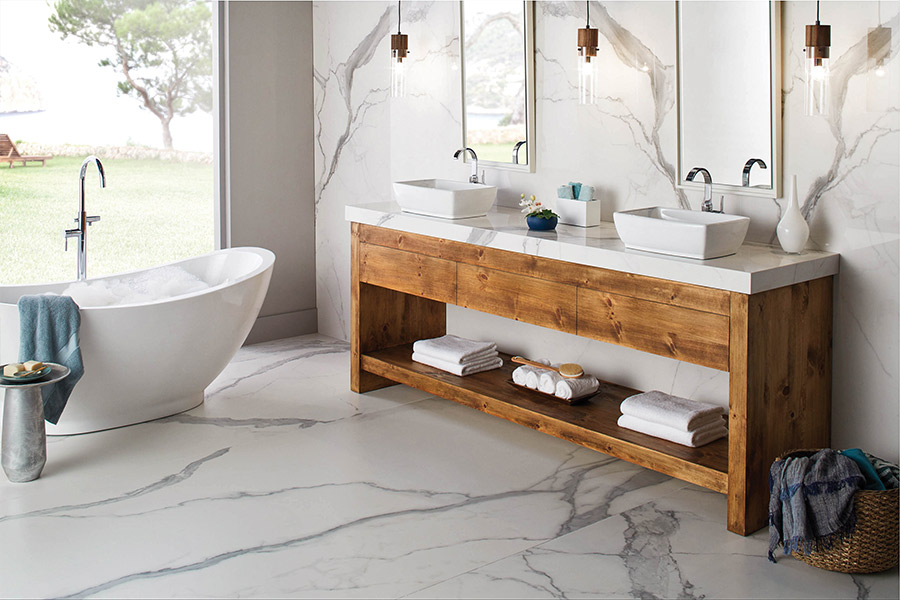
- Marble- and stone-look porcelain: the veining of Calacatta or the texture of slate without the sealing and etching worries of real stone.
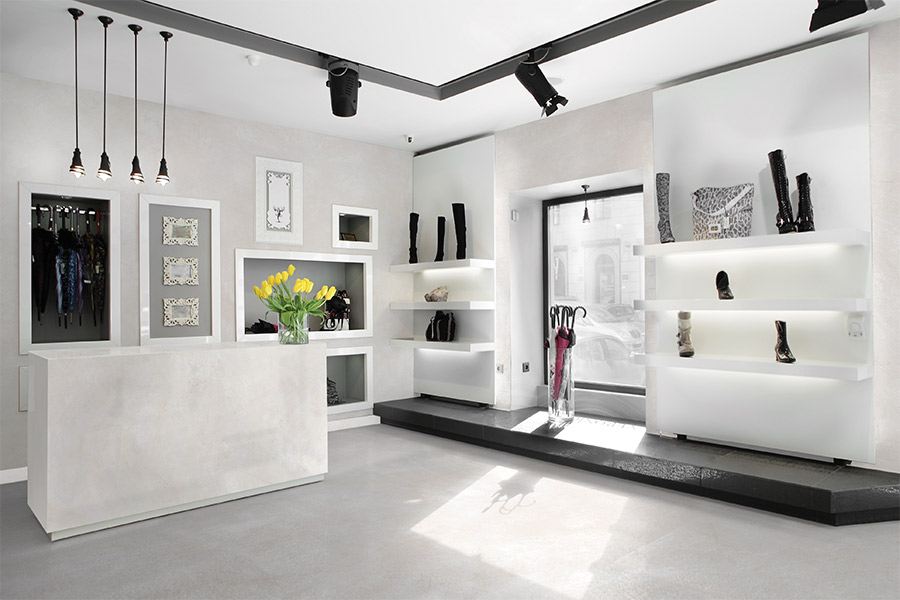
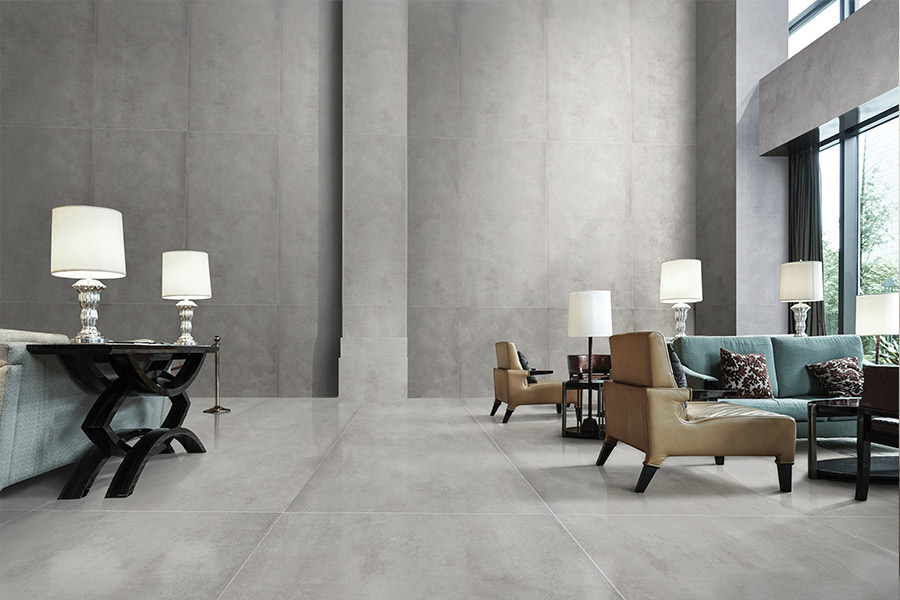
- Concrete-look and large-format: big tiles with minimal grout lines for a clean, modern floor that makes rooms feel larger.
- Subway, hex, and mosaics: classic shapes for backsplashes, shower walls, and bathroom floors, including penny rounds, pickets, and herringbone sheets.
- Glass and metal accents: shimmer and texture for backsplashes and feature strips, usually paired with ceramic or porcelain field tile.
How to Read Tile Specs
A tile's spec sheet tells you where it can go and how it will wear. These are the details worth checking before you fall in love with a color:
- PEI rating: a 0 to 5 scale for the wear resistance of glazed tile. PEI 1 is for walls, PEI 2 suits walls and light-traffic floors like bathrooms, PEI 3 handles every room in a typical home, and PEI 4 and 5 are built for heavy and commercial traffic.
- Water absorption: impervious tile (porcelain) absorbs the least, followed by vitreous, semi-vitreous, and non-vitreous. Showers and outdoor spaces call for impervious tile.
- Slip resistance (DCOF): the dynamic coefficient of friction. Level interior floors that get wet should measure at least 0.42. Matte and textured finishes grip better than polished ones.
- Rectified edges: edges ground perfectly square after firing, which allow tight grout lines. Pressed edges need wider joints.
- Size and format: large-format tile (any side 15 inches or longer) needs a flatter subfloor. Small mosaics follow the slope of a shower floor and add grip through extra grout lines.
- Shade variation: a low-to-high scale describing how much tiles differ from piece to piece. High variation looks natural; low variation looks uniform. You can filter our catalog by it, along with look, material, gloss, and where the tile installs.
Choosing Grout and Tile Layouts
Grout and layout shape the finished floor almost as much as the tile does, so choose them with the tile, not after it's ordered.
- Grout color: grout close to the tile color hides the joints and makes a floor read as one surface. A contrasting grout outlines every tile, which suits subway and patterned layouts. On floors, mid-tone grays and warm taupes hide dirt best.
- Grout width: rectified porcelain can take joints as narrow as 1/16 to 1/8 inch. Pressed-edge and handmade-look tile need wider joints to absorb size differences.
- Grout type: cement-based grout is standard and needs periodic sealing. Epoxy and premixed stain-resistant grouts cost more but resist stains without sealing, which pays off on kitchen floors and shower walls.
- Layout: a straight lay is the simplest and most budget-friendly. A brick or one-third offset suits planks and subway tile, herringbone and chevron add movement, and a diagonal layout can make a small room feel wider. Patterns with more cuts take longer to install.
Tile Brands We Carry, Including Daltile
In our showroom you'll find tile from Daltile, MSI, Atlas Concorde, and Crossville, and our online catalog adds American Olean, Anatolia, Florida Tile, Marazzi, and Maniscalco. The Daltile selection in our catalog spans tile, natural stone, and decorative accents. Comparing brands side by side in person is the best way to judge color, texture, and edge quality, because photos flatten all three.
Tile vs. Luxury Vinyl and Natural Stone
Tile and luxury vinyl are the two floors people cross-shop most for kitchens, bathrooms, and basements. Tile wins on longevity, hardness, and design range: it resists scratches and dents far better, won't fade, and tolerates heat and water indefinitely. Luxury vinyl wins on comfort and speed: it's warmer and softer underfoot, quieter, easier on dropped glasses, and it installs faster over imperfect subfloors. If you're weighing the two, our luxury vinyl flooring guide covers vinyl's construction and wear layers, and we'll show you both side by side.
Natural stone is the other comparison. Real marble, travertine, and slate bring one-of-a-kind character that manufactured tile can only approximate, but they're softer, need sealing, and marble etches when acidic spills sit on it. Stone-look porcelain gives you a similar look with almost no upkeep. If only the real thing will do, browse our natural stone tile and slab selection, and our design team will walk you through the maintenance trade-offs before you commit.
Where Tile Works Best, Room by Room
Tile belongs anywhere water, grit, or heavy traffic is part of a room's job.
- Bathrooms and showers: porcelain floors, tiled walls, and full shower surrounds over a proper waterproofing membrane. Choose small or textured tile for shower floors, and think about your vanity at the same time. Our article on bathroom cabinet design ideas for Northern Massachusetts homes covers vanity styles and finishes, plus why you should bring cabinet samples along when you choose tile.
- Kitchens: porcelain holds up to spills, chair traffic, and dropped utensils. For the backsplash, options run from classic subway to glass mosaics and full-height feature walls. Add an anti-fatigue mat where you stand longest.
- Mudrooms and entryways: tile is the ideal landing zone for wet boots. Where the entry leads into wood floors, our hardwood mudroom guide recommends a two-zone mudroom layout, with ceramic or porcelain at the door and wood once most of the moisture has dropped off.
- Basements and laundry rooms: porcelain over a concrete slab is one of the most dependable below-grade floors, and it shrugs off a washing machine leak.
- Living areas: large-format or wood-look porcelain carries one continuous floor through an open plan, and tile pairs especially well with radiant floor heat.
- Patios and feature walls: porcelain pavers extend the look outdoors, and stacked stone ledger panels dress up fireplaces and accent walls.
What Affects the Cost of Tile
Tile projects vary more in cost than most flooring because so much of the price is labor and preparation. The main factors:
- Material: ceramic usually costs least, porcelain more, and natural stone and glass mosaics the most.
- Size and pattern: large-format tile needs a flatter substrate and careful handling, and mosaics take time to set. Herringbone, diagonal, and mixed patterns add cuts and waste.
- Subfloor prep: leveling, stiffening, cement board, or an uncoupling membrane where the floor needs it.
- Waterproofing: showers and tub surrounds need a waterproofing system behind and beneath the tile.
- Removal and trim: tearing out old tile is labor-intensive, and edge trims, thresholds, and bullnose pieces finish the job.
When tile is one piece of a bigger project, our kitchen and bathroom remodeling team plans cabinets, counters, plumbing, lighting, and tile together, so you work with one team instead of juggling contractors. Convenient pay-over-time financing is available for tile and remodeling projects.
Tile Installation Done Right
A tile floor is only as good as what's under it. A lasting installation starts with a flat, stiff substrate, then the right backer board or uncoupling membrane, fully bedded thinset (back-buttered on large tiles), movement joints at the perimeter, and grout that's cured and sealed where needed. In showers, a continuous waterproofing membrane goes in before a single tile.
Our own installers handle all of it, with job supervision on every project, and our tile installation services also cover shower surrounds, backsplashes, outdoor pavers, and tile repair and regrouting when an older floor needs attention.
Caring for Tile Floors
Tile is one of the easiest floors to maintain, and a few habits keep the grout looking as good as the tile:
- Sweep or vacuum grit regularly; sand is what dulls glazes over time.
- Mop with warm water and a pH-neutral cleaner. Skip vinegar, bleach, and other harsh cleaners, which break down grout and etch natural stone.
- Seal cement-based grout and natural stone as the manufacturer recommends.
- Keep mats at every entry in winter to catch salt and sand.
- Fix cracked grout or loose tile early, before water gets underneath.

Compare Tile Side by Side in Woburn
Tile is easiest to choose in person, where you can feel the texture, see the edge quality, and hold a sample against your cabinets. Visit our Woburn showroom to compare brands side by side, or let us bring tile samples to your home with our shop-at-home service. Horizon Interiors is family-owned, with over 50 years of combined experience, and more than 90% of our business comes from referrals. When you're ready, book your free tile estimate and we'll help you choose tile that fits your rooms and your budget.
Request a consultationFeatured Tile
Tile Flooring FAQs
Tile feels cooler underfoot than wood or vinyl because it draws heat away from your feet. Area rugs in living spaces help, and tile is one of the best partners for radiant floor heating because it conducts and holds heat so well. Heated bathroom floors are a popular upgrade for exactly this reason.
Not when you choose the right finish. Matte, textured, and honed porcelain grips far better than polished tile, and a DCOF of 0.42 or higher is the benchmark for level floors that get wet. For shower floors, small mosaics add grip through their extra grout lines.
Properly installed porcelain and ceramic tile can last 50 years or more. The tile itself rarely wears out; grout and caulk are what need attention, and both can be refreshed without replacing the floor. A well-built installation over a stiff, flat subfloor is what gets you to that lifespan.
Sometimes. If the old tile is flat, firmly bonded, and free of cracks, new tile can go over it with the right bonding materials, but the added height affects doors, toilets, and transitions. Removing the old tile is usually the better long-term choice. We'll assess what you have during your estimate and recommend the right approach.
Cracked tile almost always points to movement underneath, not the tile itself. Wood subfloors that flex, settling, and missing movement joints put stress on the tile and grout. Stiffening the floor and using an uncoupling membrane prevents most cracking in older homes.
Larger tiles often make a small bathroom floor feel bigger because there are fewer grout lines breaking up the space. Shower floors are the exception: they need small tile, like mosaics or hex, to follow the slope to the drain and give your feet better grip.
Reimagine your space
Get inspired with our beautiful flooring galleries