

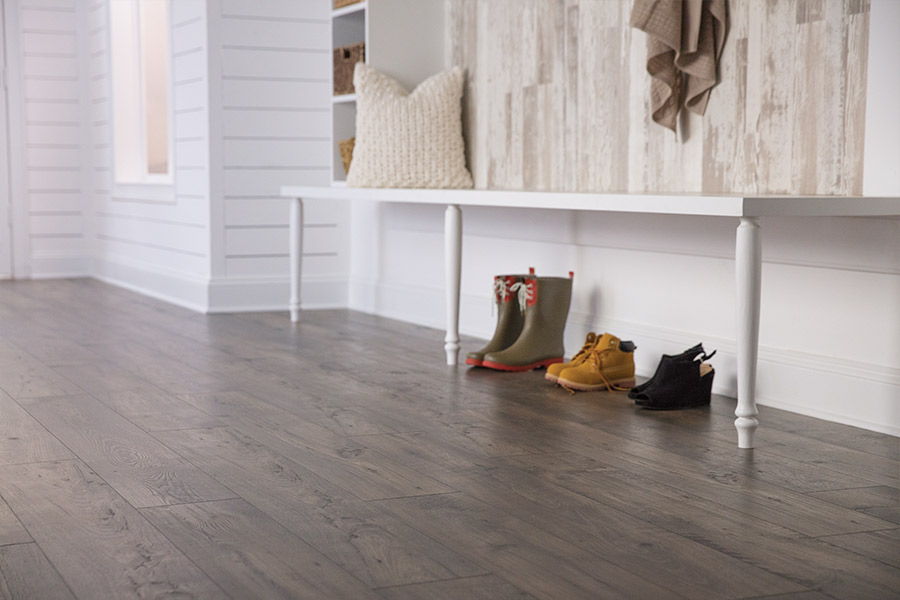
Picture a February afternoon. Boots caked in slush, kids dropping hockey bags, the dog shaking off road salt at the back door. Your mudroom takes the hit every single day. You love the warmth and character of hardwood, but you also know New England winters are tough on wood. The good news: with the right product and smart design choices, you can absolutely have hardwood in that hardworking entry.
Below, we’ll walk through how we guide homeowners to mudroom-ready hardwood that looks beautiful and survives real life.
Solid vs. Engineered: Pick the Right Construction
Mudrooms see big swings in temperature and humidity. Snow melts, heaters kick on, doors open and close all day. That movement in the environment can cause wood to expand and contract.
In most homes, we lean toward engineered hardwood for these transition spaces because its layered construction is more dimensionally stable than solid planks. You still get a real wood surface, but with better resistance to cupping and gapping when Massachusetts weather changes on a dime. If you want to compare species, widths, and constructions side by side, our hardwood flooring collections are a strong starting point before we narrow things down in person.
For clients who are set on solid wood in an entry, we talk through acclimation, subfloor prep, and realistic maintenance so the floor has the best chance of aging gracefully. The key is matching the construction to the way your household actually lives.
Species, Color, and Finish That Hide the Mess
Not all wood species behave the same when faced with salt, grit, and daily traffic. In a busy mudroom, we usually recommend:
- Harder species like oak, hickory, or maple to resist denting from dropped gear and heavy boots.
- Medium-to-dark tones with a bit of variation so every speck of dirt doesn’t scream for attention.
- Low-sheen or matte finishes that make small scratches and scuffs far less noticeable than a high-gloss surface.
Homeowners in older neighborhoods who want to honor the character of their house often gravitate toward classic oaks that echo original floors, while newer builds might lean into wide-plank, modern stains. If you’re trying to coordinate your entry with adjacent spaces, browsing a few of our completed flooring projects can help you see how different tones flow from mudroom to kitchen or family room.
Think of your mudroom as the “filter” for the rest of the house. The better it hides and withstands the mess, the easier the rest of your floors will be to maintain.
Design Details That Protect Your Hardwood
Choosing the right product is only half the strategy; thoughtful layout and adjoining materials make a huge difference in how well hardwood holds up in an entry.
We often design a two-zone mudroom: a highly water-resistant landing area at the exterior door and warm wood leading into the main living space. For that first step inside, many families opt for durable ceramic and porcelain surfaces where dripping coats and muddy boots can sit without worry. From there, the hardwood takes over once most of the moisture has dropped out.
Other smart details we plan for include:
- Built-in benches and cubbies to keep bags and shoes off the floor.
- Generous walk-off mats that complement, rather than fight, the wood tone.
- Thoughtful transitions so the shift from tile to wood feels intentional, not abrupt.
Because we’re a full-service design and installation team, we don’t just sell you planks; we look at the entire mudroom layout, from the subfloor to the last piece of trim, to make sure every element works together.
Installation and Maintenance for New England Winters
Even the best hardwood can fail in a mudroom if it’s installed or cared for poorly. Our crews focus on proper subfloor moisture testing, expansion gaps, and compatible underlayments so the floor can move naturally without buckling. That attention to detail matters even more in homes where a back entry sits over an unheated space.
For households that know they’ll be especially hard on their entry, we sometimes pair hardwood elsewhere with alternative surfaces at the door. Families who are constantly juggling sports schedules often appreciate waterproof luxury vinyl options in secondary entrances, while keeping wood in more formal areas.
Day-to-day care is simple but non-negotiable: quick wipe-ups of standing water, seasonal mat changes, and gentle cleaners designed for wood finishes. If you’re not sure what level of upkeep fits your lifestyle, learning more about our approach to long-term, low-stress design can be a helpful lens for the decisions ahead.
Mudrooms in our climate work hardest in the house, but they don’t have to look like utility spaces. With the right species, construction, and layout, hardwood can bring warmth and style to that everyday entry while still standing up to snow, salt, and everything in between. If you’re ready to re-think your own entrance, you can request a personalized flooring consultation and we’ll help you design a solution that fits both your home and your New England lifestyle.


