

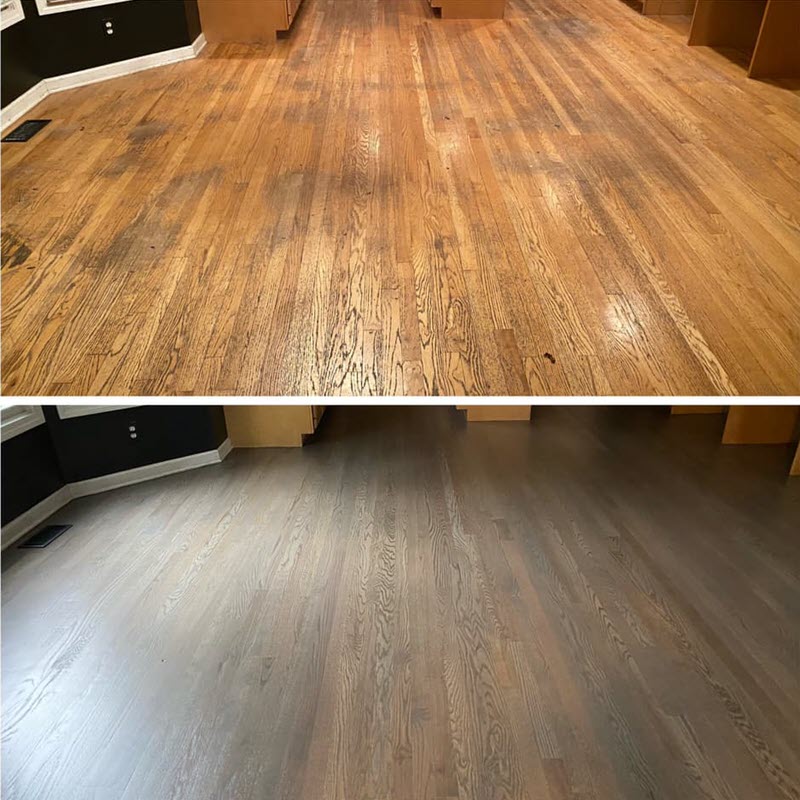
You notice it every time the afternoon light hits your living room: scratches from the dog, a gray traffic path from winter boots, maybe a few boards that have started to cup after years of New England humidity swings. If you live in Reading, it can be hard to tell whether your hardwood floors just need a fresh sanding or if it’s finally time to invest in brand-new planks.
This is where a little education goes a long way. Understanding what refinishing can fix—and where replacement is the smarter choice—helps you protect both your home and your budget.
What Refinishing Can (And Can’t) Fix
Refinishing is essentially giving your existing wood a reset. We sand off the old finish, address minor surface flaws, and apply new stain and topcoat. Done well, it can make tired floors look almost new.
Refinishing is usually a good fit when:
- Scratches, scuffs, and dullness are mostly in the finish, not deep into the wood
- Color feels dated, but the boards themselves are stable
- You don’t see widespread water damage, rot, or major gaps
In many older homes, there’s real value in preserving the original character. If the boards are thick enough to tolerate sanding, a quality refinishing job can highlight that patina instead of hiding it. When you reach the point where you’re considering a different species, wider planks, or a more stable construction for our dry winters and humid summers, it can be helpful to compare those ideas to the solid and engineered hardwood options available today.
Key idea: Refinishing restores the look of floors that are structurally sound. It does not solve underlying movement, moisture problems, or subfloor issues.
Signs It’s Time to Replace Instead
There are situations where sanding and coating again will only mask problems for a short time. Replacement becomes the better long-term investment when the wood or subfloor is compromised.
You’ll want to lean toward new flooring if you notice:
- Soft, spongy spots that suggest subfloor damage
- Severe cupping or crowning across large areas
- Deep pet stains or water marks that go through the full thickness of the board
- Multiple past refinishes that have left the tongue-and-groove edges very thin
Homes that have seen decades of Massachusetts winters often show these issues near exterior doors or in rooms that once had radiators or window AC units leaking onto the floor. In those cases, we look beyond the surface and design a replacement that addresses structure, moisture management, and style at the same time.
If you’re exploring what a full transformation might look like, especially in spaces that connect to kitchens or baths, it can be inspiring to browse completed remodeling projects that pair new hardwood with updated cabinetry and finishes.
Considering Lifestyle, Climate, and Future Plans
For many Reading families, the decision isn’t just about condition—it’s about how you live. Busy households with kids, pets, and constant foot traffic from the garage will put very different demands on a floor than a quieter, formal space.
Refinishing makes sense when you love your current layout and species, and you simply want a cleaner, more durable finish to stand up to daily life. We can often adjust sheen level and stain color to better hide future wear. When you’re ready to rethink the whole feel of a room—perhaps moving from narrow boards to a wider-plank look that suits a more modern Burlington-style open plan—new installation opens up far more possibilities.
Because our team designs, supplies, and installs, we can walk you through how today’s wide-plank engineered wood choices handle expansion and contraction in New England’s changing seasons, and how they compare to traditional solid oak.
How a Full-Service Partner Helps You Decide
This decision is rarely black and white. Two rooms in the same house can call for different approaches: maybe the dining room is perfect for refinishing, while a heavily used mudroom needs a more resilient surface altogether.
As a full-service interior contractor, we look at the entire story: subfloor condition, traffic patterns, future remodeling plans, and how your floors tie into cabinets, countertops, and adjacent materials. When a flooring update is part of a larger kitchen or bath overhaul, it’s often smart to coordinate that work with start-to-finish remodeling services so everything—from the hardwood to the tile and lighting—comes together seamlessly.
If you’re unsure where your own floors fall on the refinish-or-replace spectrum, the easiest next step is to have us take a look in person. You can request a personalized flooring estimate and we’ll help you weigh the pros and cons for each room before you commit to a direction.


