

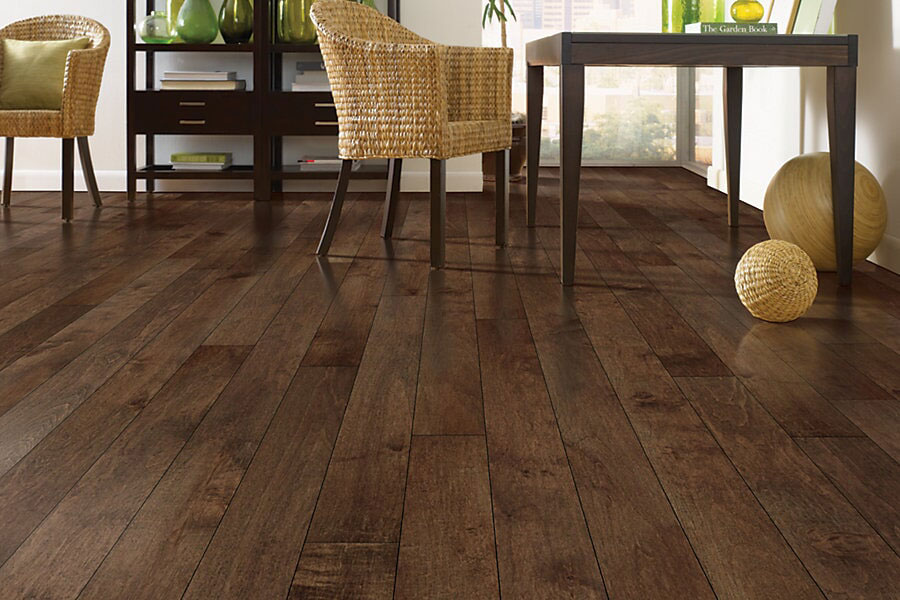
If you have started shopping for hardwood flooring, you have encountered the fundamental choice: engineered or solid? Both options deliver the beauty of real hardwood, but their construction differs in ways that affect performance, installation options, and long-term value. At Horizon Interiors in Woburn, we stock over 2,700 hardwood flooring products split between these two categories, and we have helped thousands of homeowners navigate this decision. Here is what you need to know.
Understanding the Construction Difference
Solid Hardwood is exactly what the name suggests: a single piece of wood milled to thickness, typically 3/4 inch. When you walk on solid hardwood, you are walking on the same material from top to bottom. This traditional construction has been used in American homes for centuries and remains prized for its authenticity and longevity. At Horizon Interiors, our solid hardwood selection includes nearly 1,000 products across species like White Oak, Red Oak, Maple, and Hickory.
Engineered Hardwood features a real hardwood wear layer (the surface you see and walk on) bonded to multiple layers of plywood or high-density fiberboard beneath. This layered construction, with alternating grain directions, creates exceptional dimensional stability. The wear layer thickness varies by product, typically ranging from 1/16 inch to 1/4 inch, with thicker wear layers allowing for more refinishing potential.
Why Construction Type Matters for Massachusetts Homes
The primary performance difference between engineered and solid hardwood relates to dimensional stability, which is particularly relevant for homes in our region.
Humidity Response: Wood naturally expands and contracts with changes in moisture content. In Massachusetts, indoor humidity can drop to 20% during winter heating season and rise above 60% in summer. Solid hardwood responds to these changes by expanding, contracting, and potentially gapping or cupping. Engineered hardwood's cross-grain construction minimizes this movement, maintaining a more stable appearance year-round.
Installation Over Concrete: Many Massachusetts homes, particularly newer construction and renovated spaces, feature concrete subfloors in basements, sunrooms, or slab-on-grade construction. Solid hardwood should never be installed directly over concrete due to moisture concerns. Engineered hardwood, however, can be floated, glued, or even installed with radiant heating systems over concrete slabs.
Below-Grade Applications: Finished basements represent one of the most popular home improvement projects in Northern Massachusetts. Engineered hardwood makes these spaces possible with the look and feel of real wood, where solid hardwood would be inappropriate due to moisture and humidity conditions below grade.
When Solid Hardwood Makes Sense
Despite engineered hardwood's versatility, solid hardwood remains the right choice in many situations:
Refinishing Potential: Solid hardwood can be sanded and refinished numerous times throughout its lifespan, potentially lasting 100 years or more with proper care. If you anticipate major refinishing projects or want maximum long-term flexibility, solid hardwood provides this advantage.
Matching Existing Floors: Many older Massachusetts homes feature original solid hardwood flooring. When expanding or repairing these floors, matching with solid hardwood ensures consistent appearance and performance. At Horizon Interiors, our Appalachian Flooring selection includes extensive solid hardwood options in traditional species and dimensions that complement historic installations.
Above-Grade Living Spaces: For main floors and upper levels in climate-controlled homes, solid hardwood performs beautifully. With proper humidity management (keeping indoor humidity between 35-55%), solid hardwood can serve generations without issue.
Investment Value: Some homeowners simply prefer the knowledge that their floors are solid wood throughout. This can be a personal preference and, in some markets, a perceived value for resale.
When Engineered Hardwood Excels
Engineered hardwood is the better choice when:
Installing Over Concrete or Radiant Heat: The stability of engineered construction handles these challenging substrates safely. Collections like Kahrs' World Collection and Appalachian Flooring's engineered lines are specifically designed for these applications.
Finishing Basements: Below-grade moisture makes engineered the only responsible hardwood choice. Your finished basement can have the warmth of real wood without the risks associated with solid hardwood in these environments.
Wide Plank Installations: Wider planks experience more movement than narrow strips. Engineered construction handles the dimensional changes of wide planks (7 inches and above) more reliably than solid hardwood, which is why most premium wide plank flooring is engineered.
Kitchens and Powder Rooms: Spaces with occasional moisture exposure benefit from engineered hardwood's better moisture tolerance. While neither type should be exposed to standing water, engineered hardwood handles the humidity fluctuations of these rooms more gracefully.
Quality Considerations for Both Types
Whether you choose engineered or solid, quality varies significantly between products:
Finish Quality: The finish determines scratch resistance, stain resistance, and long-term appearance. Appalachian Flooring, which represents over half of our hardwood catalog, developed their proprietary EverShine finish technology for their Signature collection. This aluminum oxide-enhanced finish provides exceptional durability and comes with a 20-year residential warranty. Budget products often feature thinner, less durable finishes that show wear more quickly.
Wear Layer Thickness (Engineered): Not all engineered hardwood is created equal. Premium products feature wear layers of 1/8 inch or more, allowing for light sanding and refinishing. Budget engineered floors may have wear layers too thin to refinish at all. Ask about wear layer thickness when comparing products.
Core Construction (Engineered): Better engineered floors use furniture-grade plywood cores with multiple layers. Budget products may use fewer layers or lower-quality substrates. The core affects stability, moisture resistance, and how well the floor holds fasteners during installation.
Price Considerations
Neither category is inherently more expensive. Both solid and engineered hardwood span from budget options to premium luxury products. In general:
Entry-level engineered hardwood often costs less than comparable solid hardwood due to efficient use of premium wood species in the wear layer only. However, high-end engineered floors from brands like DuChateau and Kahrs can exceed the cost of solid hardwood, reflecting their superior construction and design.
Installation costs also vary. Engineered hardwood's floating installation option (where planks connect to each other rather than the subfloor) can reduce installation costs compared to solid hardwood, which typically requires nail-down installation over a wood subfloor.
Making Your Decision
At Horizon Interiors, we help Woburn-area homeowners work through this decision every day. Our approach focuses on your specific situation:
What rooms are you flooring? Below-grade or concrete subfloors point toward engineered. Wood subfloors in above-grade spaces open both options.
Are you matching existing floors? Solid hardwood may be necessary for seamless integration.
What is your humidity management? Homes with HVAC systems that maintain consistent humidity can support solid hardwood more reliably.
Both engineered and solid hardwood deliver the beauty and value of real wood flooring. The right choice depends on your home, your rooms, and your priorities.
Explore Both Options at Our Showroom
Understanding the difference between engineered and solid hardwood is easier when you can examine samples side by side. At our Woburn showroom, you can see construction quality, compare wear layer thickness on engineered products, and explore the extensive collections available from Appalachian Flooring, DuChateau, Kahrs, Bruce, and our other premium brands.
Call (781) 304-6784 to schedule a consultation or apply on our website! We serve homeowners throughout Woburn, Reading, Burlington, Lexington, Winchester, and the greater Northern Massachusetts area.


