

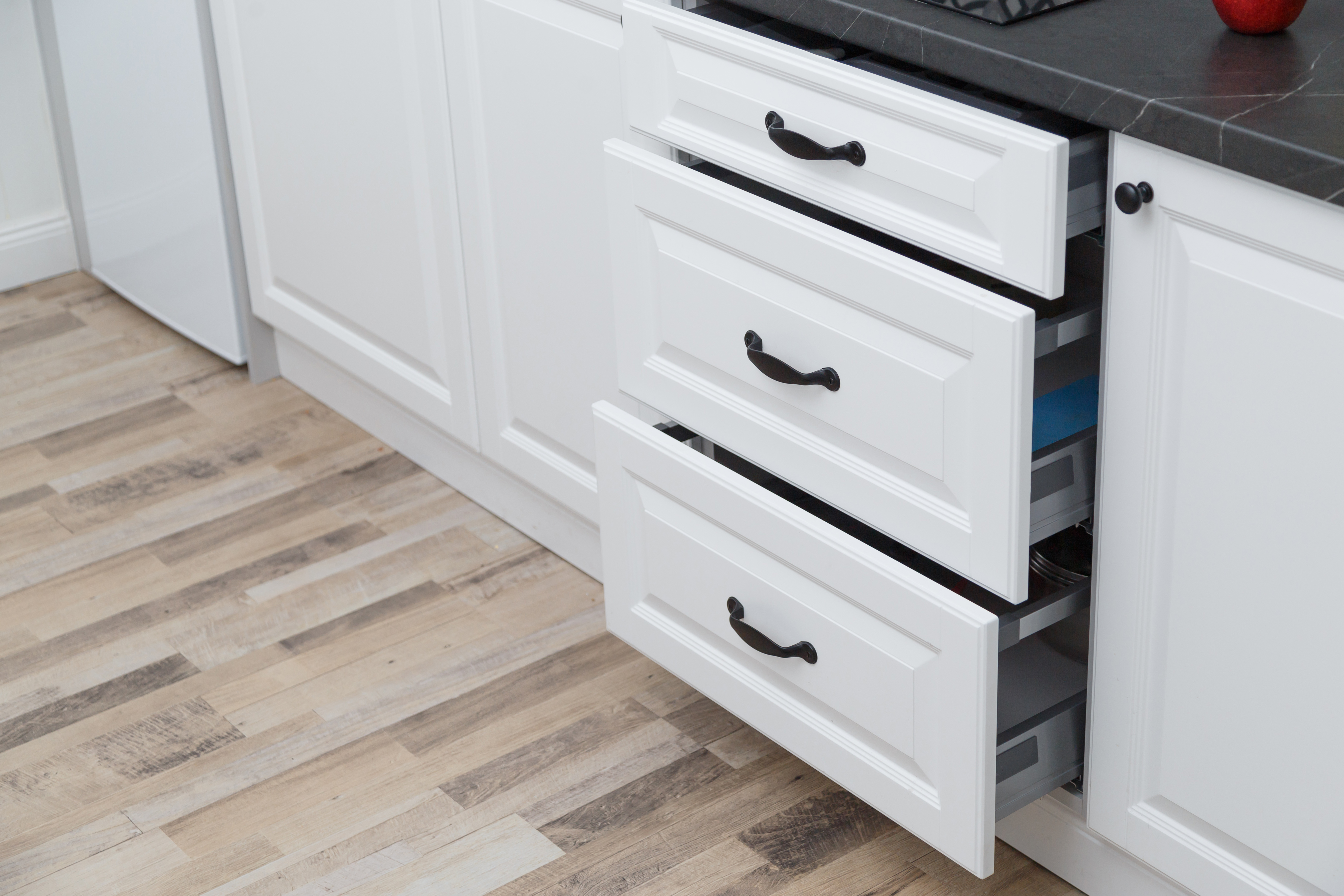
You might love the charm of your older kitchen—the warm wood trim, the cozy layout—but feel like the room itself hasn’t kept up with how you live today. That’s a common story in and around Woburn, where many homes still have perfectly solid cabinets wearing dated doors and hardware. The good news: you don’t always need to gut the entire space. Updating your cabinet door style can deliver a surprisingly modern look while respecting the character that drew you to the house in the first place.
Why door style matters so much in a traditional kitchen
Cabinet doors are the “face” of your kitchen. In a traditional New England home, you often see raised-panel doors with heavy molding, arches, or ornate profiles. They suited the era, but in today’s light-filled, open layouts, those details can make the room feel smaller and busier than it is.
By simplifying the door style while keeping quality construction, you can:
- Make older cabinets feel custom instead of dated
- Brighten the room without changing the footprint
- Create a cleaner backdrop for stone counters, tile, and flooring
When we plan a full kitchen update, we look at how your door style will interact with new counters, backsplash, lighting, and even plumbing fixtures, which is why many homeowners start with a conversation about replacing outdated kitchen cabinets as part of a full remodel.
Slim Shaker: fresh, but still classic
Shaker has been a favorite for years because it walks the line between traditional and modern. For a home that already leans classic, the key is to tweak the proportions. Slimmer rails and stiles (the frame parts around the center panel) instantly feel lighter and more tailored than the chunky doors you may have now.
We often recommend:
- A slightly narrower frame paired with a soft white, warm gray, or pale greige
- Simple knobs and pulls in brushed nickel, black, or warm brass
- A subtle wood grain if you prefer stained cabinets over paint
In a center-hall colonial, for example, slim Shaker fronts let you keep a traditional profile without the weight of a heavy raised panel. They also pair beautifully with stain‑resistant quartz surfaces, which add another layer of modern ease without feeling cold.
Slab doors for a calm, streamlined backdrop
If your current kitchen has lots of trim, chair rails, or busy flooring, slab cabinet doors—completely flat fronts—can be a smart way to balance everything out. They read more contemporary, but in the right wood tone or soft paint color, they still sit comfortably in a traditional envelope.
In many homes near Burlington, we see success with:
- Wood-look slab doors in a warm, mid-tone stain for lower cabinets
- Painted slab uppers in a light neutral
- Minimal hardware, sometimes just slim linear pulls
Because slab doors have no extra grooves or profiles, they are also easy to wipe down, which is useful in a household where winter road salt, splashes, and everyday cooking all show up quickly. When the floor is part of the renovation as well, pairing streamlined cabinets with wide‑plank engineered hardwood options can create a calm, cohesive envelope from floor to ceiling.
Inset and glass-front accents to keep the charm
Not every cabinet needs to be ultra-simple to feel updated. Inset doors—where the door sits flush inside the face frame—offer a furniture‑like, tailored look that can feel right at home in an older Woburn property. Used thoughtfully, they can modernize by looking intentionally crafted instead of builder‑grade.
Glass-front doors are another powerful tool. Swapping a few upper cabinets to clear or reeded glass:
- Breaks up long runs of solid doors
- Reflects light in deeper kitchens
- Lets you display favorite dishes without overwhelming the room
We often combine a clean Shaker or slim-profile inset door on most cabinets with a couple of glass fronts above a coffee station or prep area. If you want to visualize how different finishes might look alongside stone or tile, browsing completed kitchen transformations in our portfolio can help you see how these details play out in real homes.
Tying the doors into a full-room update
Cabinet doors do a lot of visual heavy lifting, but they are only one layer of a successful renovation. When we redesign a kitchen, we look at how door style works with hood shape, backsplash, flooring, and even nearby rooms. A traditional Melrose dining room, for example, might call for a softer transition between original moldings and a streamlined, updated kitchen.
Sometimes that means pairing new doors with a simple subway tile or a more contemporary backsplash. Other times, a homeowner chooses bolder accents like glass mosaic tiles for the backsplash area to add sparkle while the doors stay quiet and classic. The right combination depends on your home’s architecture and how you use the space day to day.
Ready to modernize your cabinets thoughtfully?
If your kitchen feels stuck in another decade but you still love the bones of your home, a carefully chosen door style can bridge the gap between traditional architecture and modern living. Our team handles everything—from the first design sketch through cabinet ordering, installation, and coordinating the trades—so you are never juggling multiple contractors. When you are ready to explore options in person and talk through what will work best for your space, you can request a personalized kitchen design estimate.


